

Additional Advertising Work
Lincoln Motor Company: MKC 'Live In Your Moment' Campaign
This campaign communicates a bold and direct link between the essence of “live in your moment” and the “dynamic calm” MKC. On the web, through responsive scrolling and moving imagery, the site tells the story of active calm by providing a link between either exhilaration or peace and the features of the MKC. Active features such as the 2.3L EcoBoost Engine, Lincoln Drive Control, and Six-Speed SelectShift will be called out. Quiet features will include the felted wheel wells, recessed roof rails, and Active Noise Control. By pairing the features to these two attributes, Lincoln tells a compelling story for the MKC.


Lincoln Date Night Strategy
This is an exclusive invitation to drive the luxurious Lincoln MKZ–a model of design and performance–during an extended 48-hour test drive. It’s a chance to truly experience what it’s like to own a Lincoln without any obligation. And to make our offer even more extraordinary, included with this test drive is a $100 gift card to use at the restaurant of the customer's choice. The mapped-out communication plan helps consumers discover the benefits that come with Lincoln ownership before owning one via various online and offline channels.


Healthcare advertising
Working in healthcare is incredibly rewarding and fulfilling. It could drive us to do our best knowing that It is work that can improve the lives and outcomes of people facing some of the most difficult times in their lives. Over the years I have worked for several healthcare agencies in NY as well as startups related to the healthcare space. But the reality of working on these deeply impactful products is full of obstacles in sensitive domains, which are slow, regulated, costly, and involve all the legacy and integration baggage.
Zostavax
This campaign was developed for the global market to communicate the potentially long-lasting, severe pain of shingles associated with PHN (postherpetic neuralgia) and the potential impact that this pain can have on the quality of people’ s lives. As per research, the severe pain of shingles is a motivator for consumers to get vaccinated. It is persistent nerve damage that is associated with excruciating pain that can last for months, years, or even life. One can imagine the severity of pain by the fact that 96% of patients experience acute pain that is more intense than Labor pain, and the chronic pain exceeds the severity of osteo or rheumatoid arthritis.


KFC
KFC Launch Campaign
The ask: Announce KFC’s arrival
KFC was entering India at a fascinating cultural moment. India had opened its economy. Global brands were arriving with bright logos, foreign flavors, and a certain strange electricity. But fast food was still new, Western QSR brands were under scrutiny, and KFC faced protests, regulatory pressure, and cultural resistance in its earliest entry into India. Market: Upper middle class of New Delhi and Bangalore, India. The brief was simple on paper: Announce KFC’s arrival.
But the real challenge was deeper: to make a foreign fried-chicken brand feel playful, familiar, and irresistible in a market still deciding whether to trust it.
Creative analysis
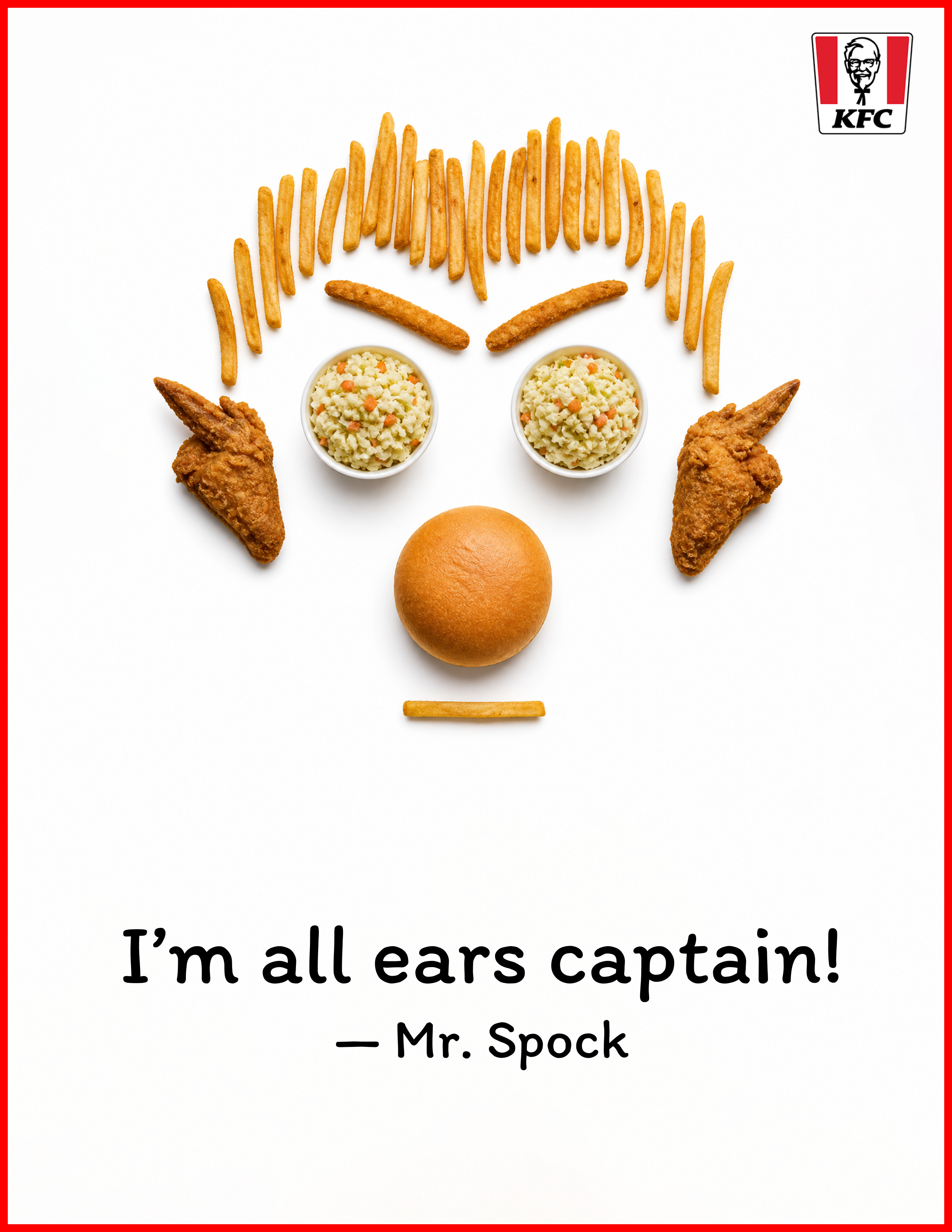
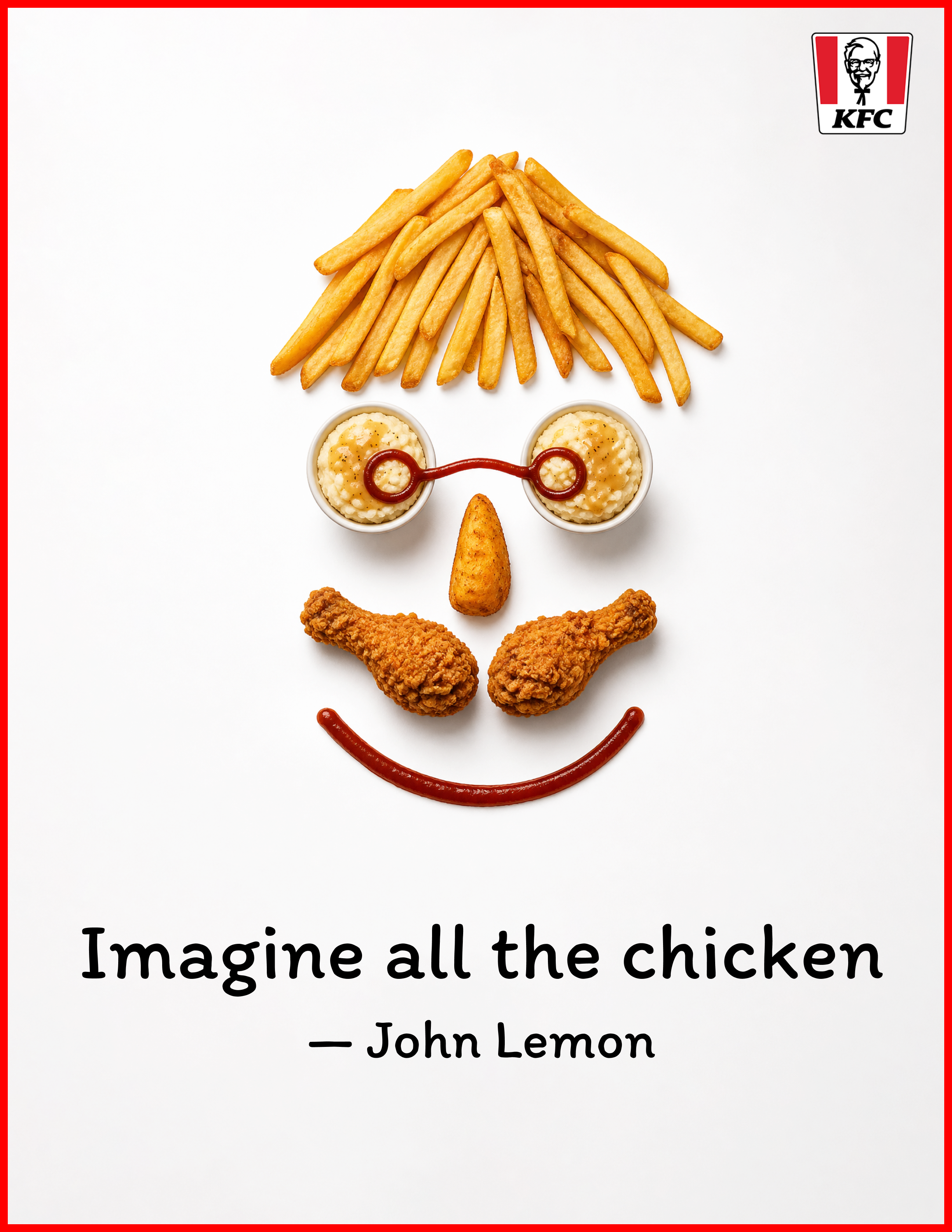
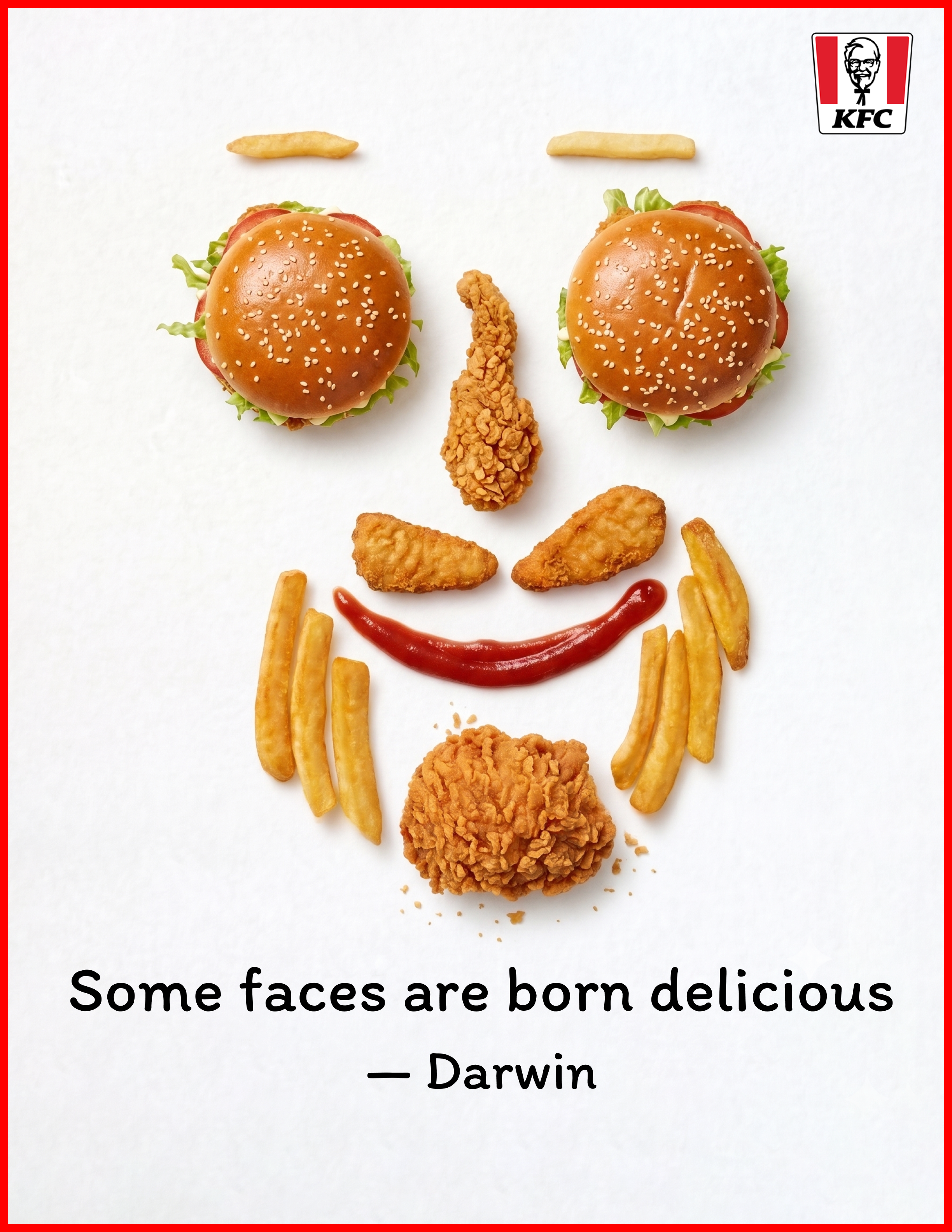
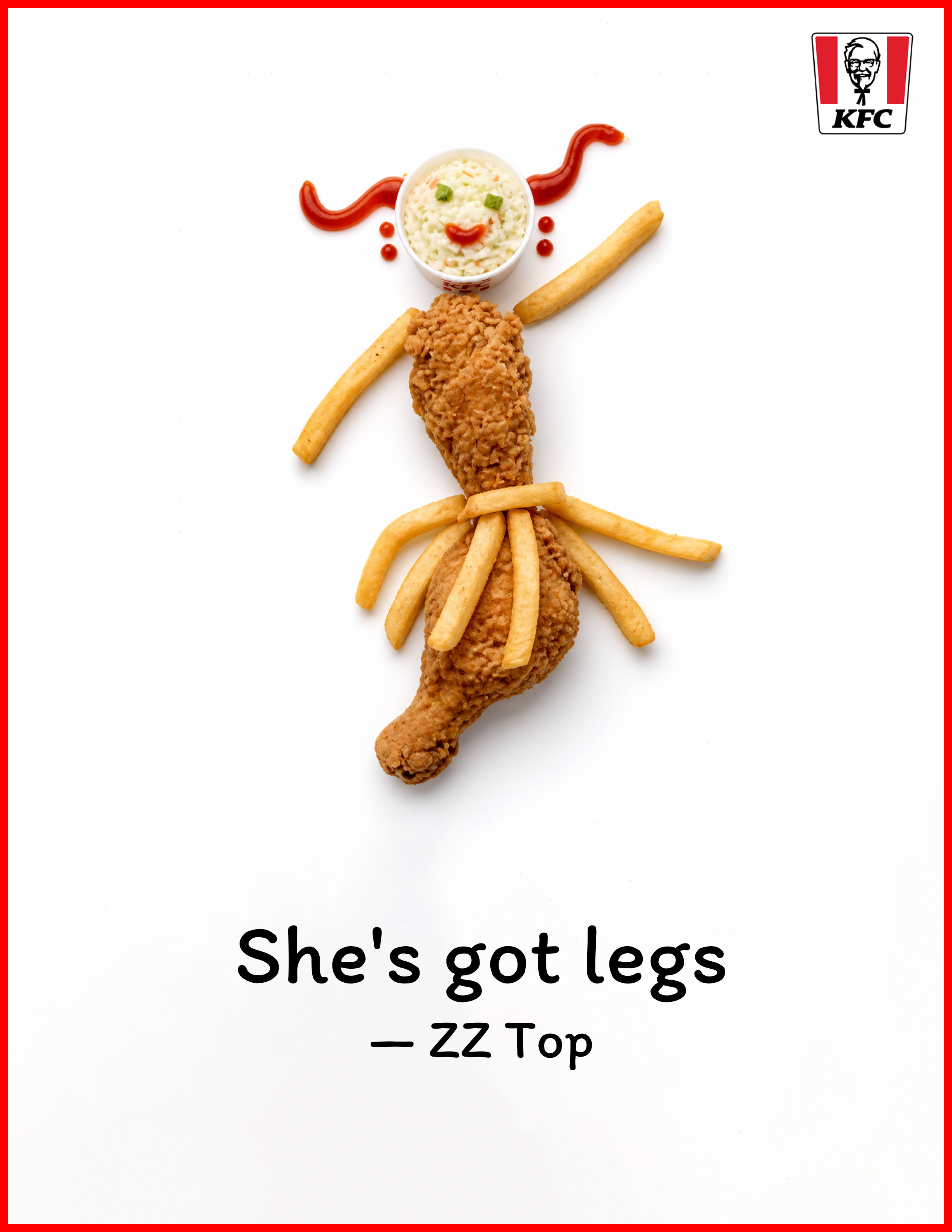
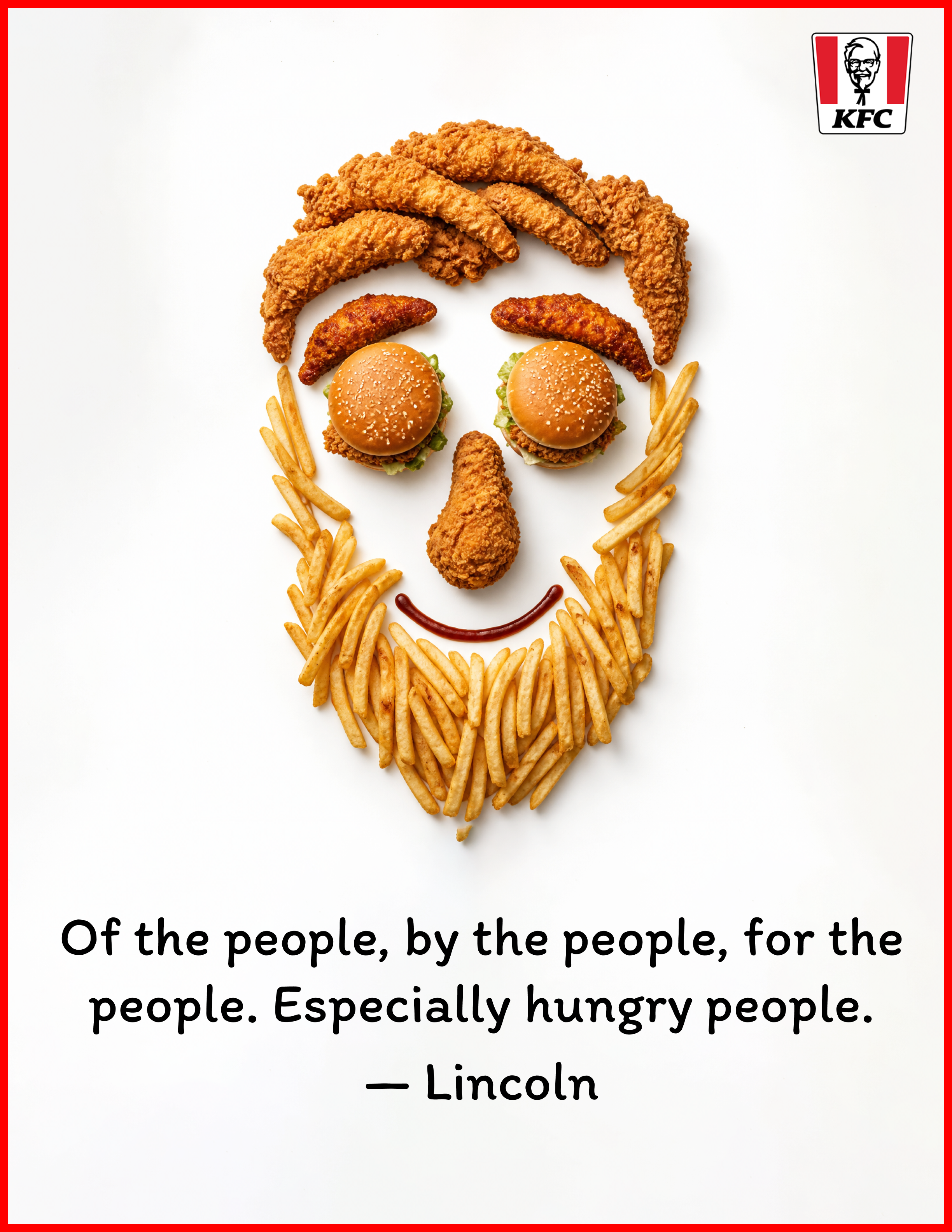
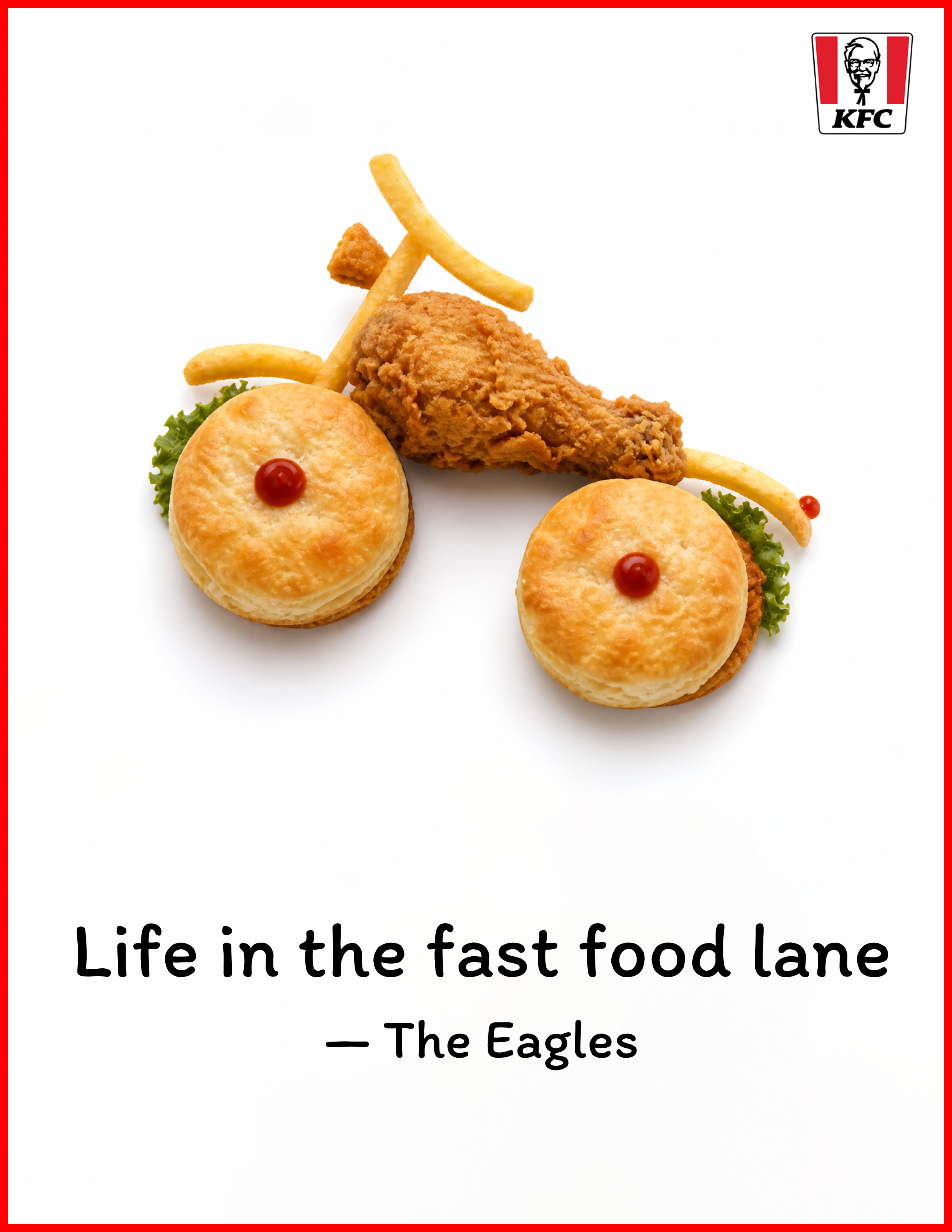
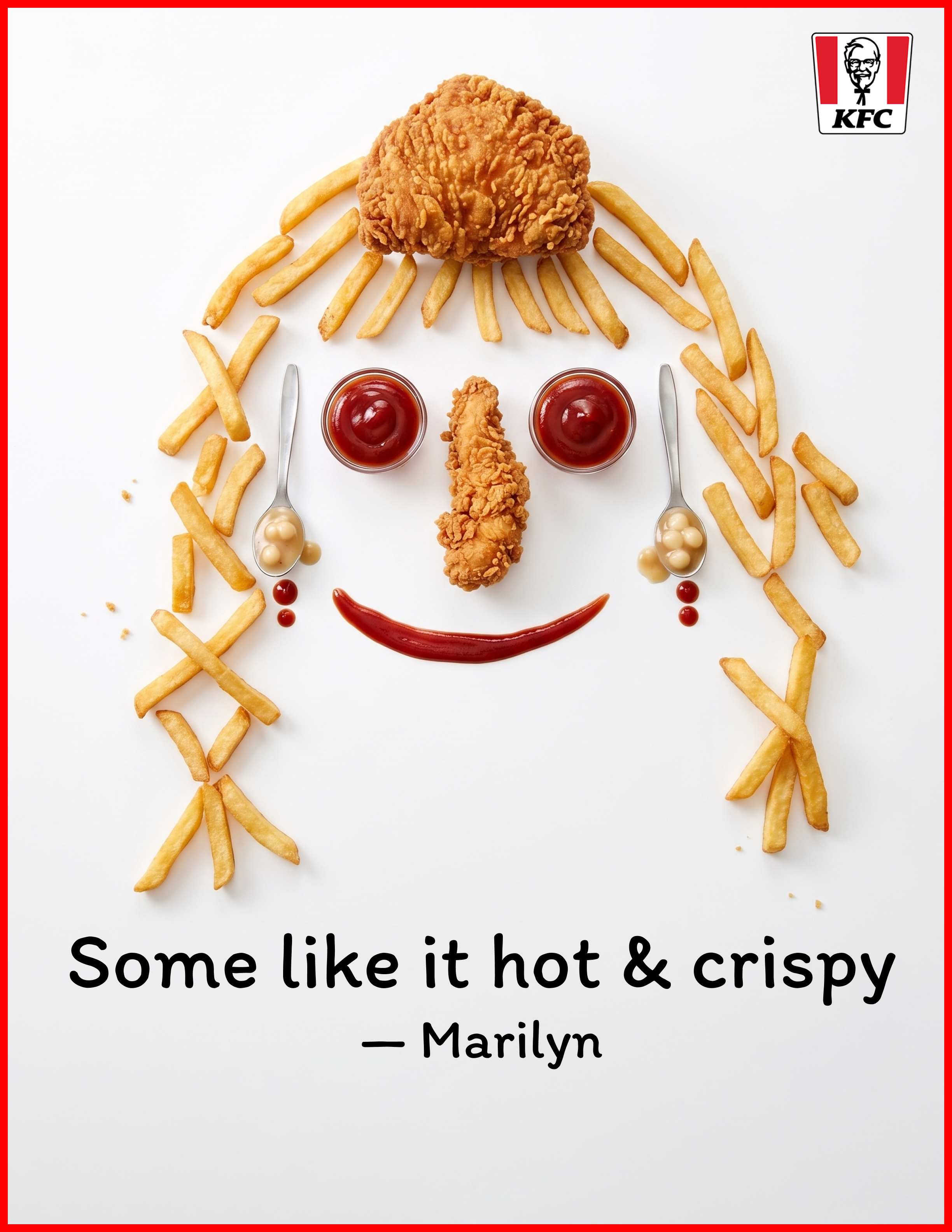
This work used a very simple creative device called pareidolia, the human brain’s tendency to see faces and meaning in ordinary objects. We do not merely look at things, but we complete them. A few fries, a piece of chicken, and a curve of ketchup form a face because the brain loves finishing unfinished stories. That made the campaign instantly accessible and reduced the fear and uncertainty of an unknown brand.
The campaign did not simply show food. It gave the brain a tiny puzzle and rewarded it with recognition.
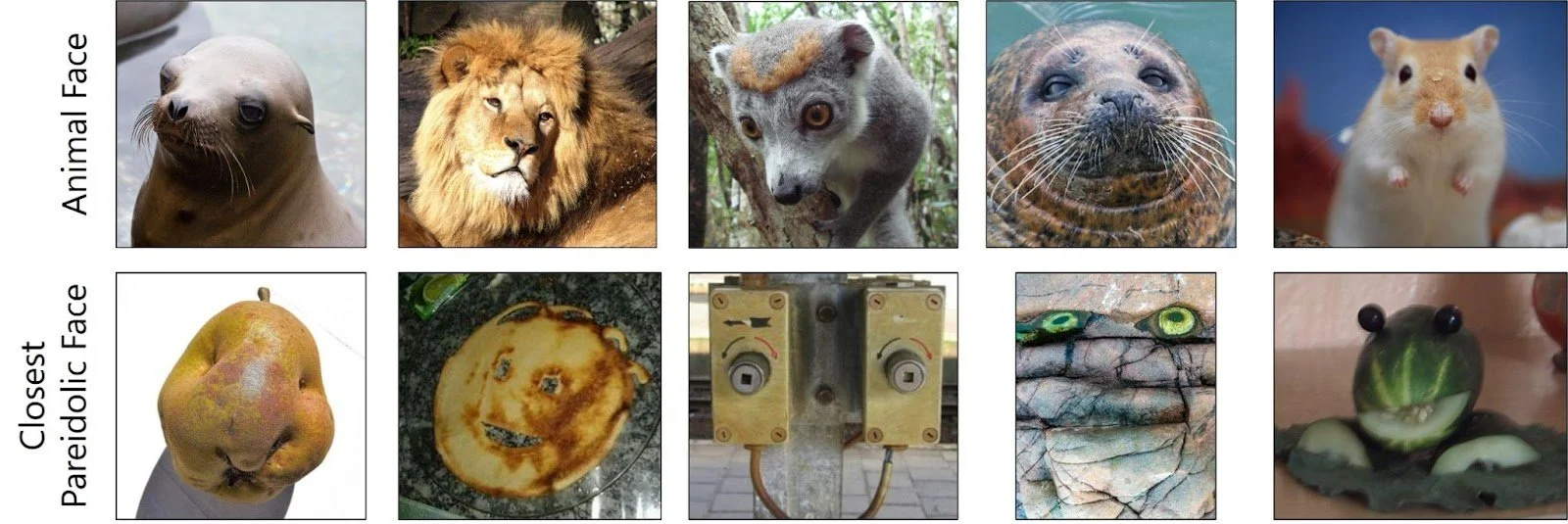
There was no long copy, no explanation, no hard sell, but just food behaving like imagination.
A new foreign food brand can feel unfamiliar, especially in a market with strong local food traditions. But a smiling face made from chicken and fries feels disarming. It lowers the guard. It followed the yet-to-be-created Joyful Design principle of creating a small emotional yes before the rational yes.
Why it worked: From curiosity to craving
The campaign made KFC feel less like an imported brand and more like a shared joke in local conversations. The tone was not premium, loud, or over-explained. It was childlike, but not childish, and the idea was extensible for the future.
It invited people into the brand through humor, pop culture, and visual surprise. That was powerful because early India QSR advertising often had to do two jobs at once: introducing a new eating format and making people comfortable enough to try it.
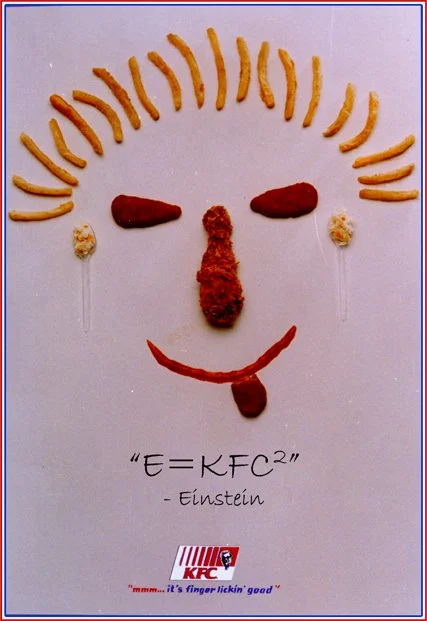
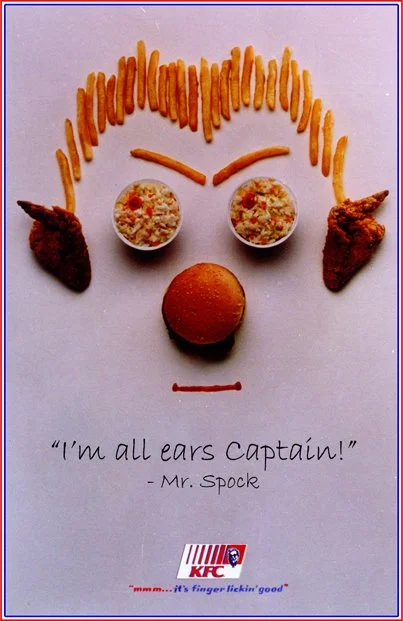
The campaign created mental availability by making the brand easier to retrieve from memory. The work created three useful emotions: Curiosity: “What am I looking at?” Recognition: “Oh, that’s Einstein / Spock / Lennon / Lincoln.” Craving: “And now I want fries.”
A note of gratitude
This work also carries the fingerprints of the people who shaped me before I fully knew what advertising could be. I am deeply grateful to the late Piyush Pandey, one of India’s greatest advertising minds, whose work helped Indian advertising find its own voice that is warmer, more human, more rooted, and less borrowed. Piyush joined Ogilvy India in 1982, rose to Executive Chairman, and later became Ogilvy’s Global Chief Creative Officer. Ogilvy has described him as “one of India’s great storytellers, a creative leader who made ideas live in people’s hearts”.
I am also deeply thankful to Sonal Dabral, who played a defining role in giving me this job opportunity despite not even having finished college, and in guiding the work. Sonal joined Ogilvy Mumbai in 1991 and, in partnership with Piyush Pandey, helped transform the agency into India’s No. 1 creative agency. His career later spanned senior creative leadership roles across Asia, including Ogilvy, DDB Mudra, and Bates141.
The strategy: The meal became mischief
While sitting in a KFC restaurant with the creative, strategy, and account teams, we were playing with food when this idea was born. It felt like a magic trick for the food category.
The magic trick: The brain enters through play, but the body exits hungry.
Instead of treating the launch like a serious corporate arrival, the campaign turned KFC food into a toy box. Fries became hair, chicken became noses, faces, bicycles, beards, and bodies. Sauce became a smile, coleslaw became eyes, and famous cultural references were bent gently into food jokes.
The campaign did not say, “We are international but instead said, “Come play with us.”
Rather than leading with menu shots, hunger appeal, the campaign took a lateral route to use the food itself as the medium
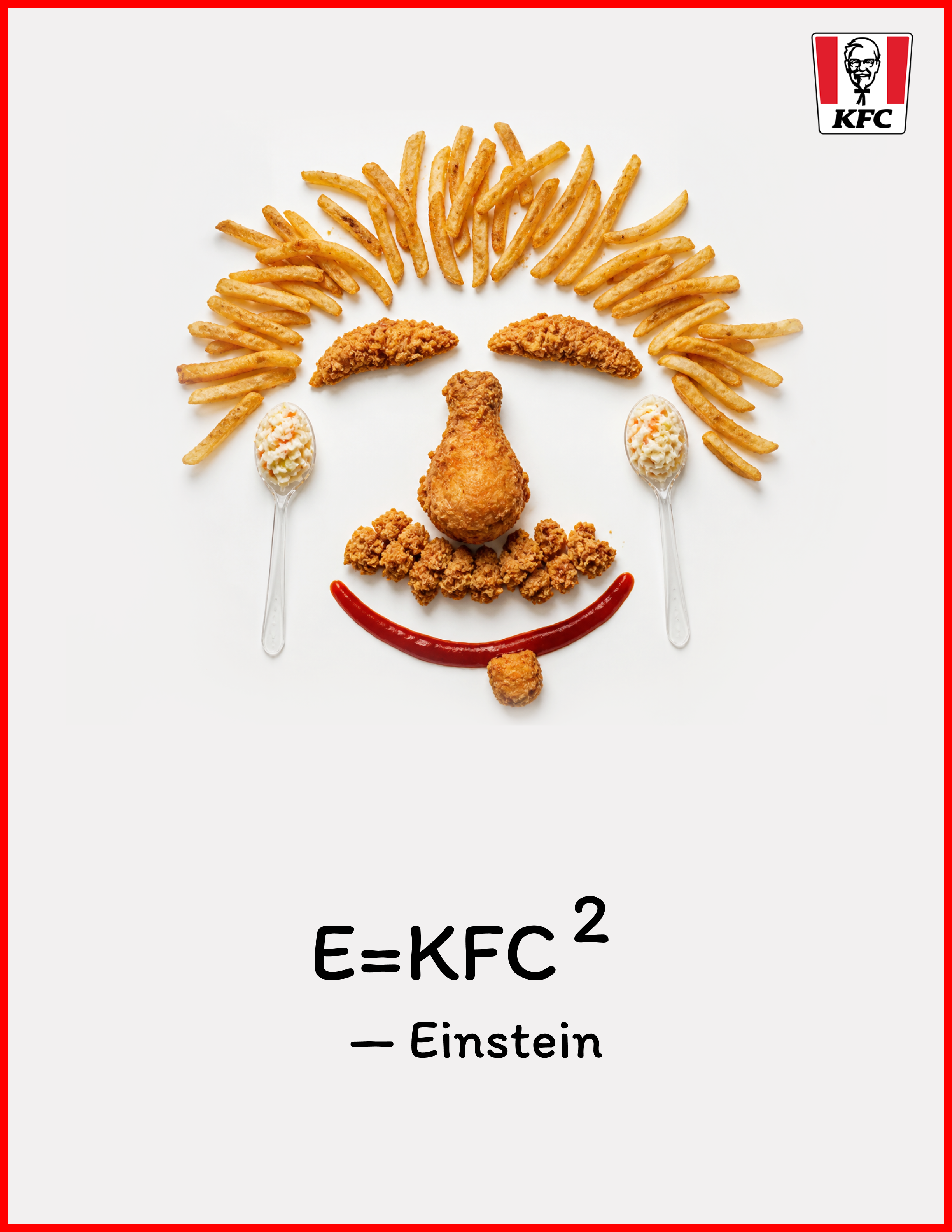
AI restored the memory
AI can generate polish very quickly, but polish is not the same as an idea. The original idea came from human play: sitting in a KFC restaurant, touching the food, laughing with the team, and seeing what the brain might see before strategy had a name.
The original work is now very old, the comps are low-resolution, and even the KFC logo is dated. So, for this portfolio, I reimagined the visuals using AI to bring back the spirit of the original idea, with higher quality and greater contextual relevance. The soul and core idea of showing ‘food as joy, advertising as play, and design as an invitation into feeling, remained the same.
Years later, I would call this Joyful Design.
But perhaps it began here at a KFC restaurant with a few fries, a piece of chicken, a red line of ketchup, and the discovery that people remember what makes them smile.
The result
Today, KFC is one of the major QSR brands in India, with more than 1,200 KFC stores (by mid-2025).
Introduced an unfamiliar Western brand to Indian consumers
Made fried chicken feel approachable, fun, and culturally non-threatening
Stood out in a media environment dominated by either hard-sell product shots or earnest family-friendly QSR advertising
“A brand enters the market through distribution. It enters memory through feeling. What people feel becomes what they remember; what they remember becomes what they choose.”
These two most decorated creative directors in India sowed the seeds of creativity and ambition that brought me to the USA. And then there were the many generous hands and minds around the work, like Sangita Devi, Adip Puri, Pallavi Joshi, and others in the team, who gave this young beginner the room to try, stumble, laugh, and make something.
My client was Ajay Banga, a brilliant mind at PepsiCo then and today the President of the World Bank Group.
“The beginner’s mind is not the absence of skill. It is the absence of fear.”
Joyful Design origin
This was the first advertising work of my career. I was new to advertising and did not know any rules. I did not yet know the seriousness of brand strategy, market entry, cultural adaptation, or consumer psychology.
So I did the only thing that felt natural, and I just played and had fun creating it. And I think, because of that, it found something many polished QSR launches miss: the idea that a brand's first impression can be a smile.
Looking back, that instinct was not naive. It was the beginning of a design philosophy.
More personally, the work established the creative philosophy that good design should produce joy, which later became the founding idea behind Joyful Design.
“Design should not only solve the world. It should return a little wonder to it.”
Looking back, I realize this campaign was not just my first advertising assignment, but was my first lesson in creative culture, and it was innocent in the best way. It came from the beginner’s mind. And I think even today that, irrespective of how much experience someone has or the awards and titles they have won, having a beginner’s mind is the secret of creativity.
American Express
Journeymakers Launch
For their 100th anniversary, American Express Travel launched Journeymakers: a new digital campaign and platform that recognizes the special people behind every travel moment.
Working with Momentum, I helped concept and create an immersive launch experience to highlight the stories, images, and functionality of the platform. Large-format posters, iPad demo stations, and flat-panel displays were used to promote the campaign. Premiums included Journeymakers-branded tote bags, luggage tags, and postcards. The event took place at the American Express Tower (200 Vesey Street) and Brookfield Place.

“Hall of JOURNEYMAKERS” Gallery
The centerpiece of the event is the Hall of JOURNEYMAKERS gallery. This experience combines imagery, video, and storytelling in order to bring the JOURNEYMAKERS “Gallery of Recognition” to life. Audiences are able to explore oversized photographs, screens, and stories – taking a journey of their own as they walk through the exhibit. And integrated within could be various JOURNEYMAKER-like moments from the 100-year history of American Express® Travel. The gallery also features iPad stations and/or digital touchscreens so the audience can try out the JOURNEYMAKERS platform for themselves.

Select concepts
3D Chalk Art “Journeys”
Installation of immersive and visually stunning 3D illustrations on-site within American Express real estate –depicting the JOURNEYMAKER anthem stories. As a call to action, the audience takes a photo and shares it on Instagram using the hashtag #journeymakers.
“Hall of JOURNEYMAKERS” Gallery
In the gallery, JOURNEYMAKER stories are organized by the pillars of Above and Beyond, Money Can’t Buy, Transformational, and Personal Connection. The gallery also features iPad stations and/or digital touchscreens so the audience can try out the JOURNEYMAKERS platform for themselves.

Giveaways: Messages in a Bottle
Small bottles include images, handwritten notes, or inspirational quotes from select JOURNEYMAKERS – written by the Bond robot. AmEx Employees RSVP for the event with a favorite photo to be included in their bottle.
Giveaways: LOMO Instant Camera
Select event attendees receive a Lomo instant camera to document their journeys with real-life instant photos and make real-time memories. The camera is labeled with the American Express Travel 100 Years mark and JOURNEYMAKERS logo.

Giveaways: Bond Robot custom luggage tag
At the event, a personalized JOURNEYMAKERS luggage tag is created by the Bond robot.
Giveaways: JOURNEYMAKERS POSTCARDS
Several JOURNEYMAKERS postcards are dropped into the gift bag, featuring beautiful imagery from the campaign.

JOURNEYMAKERS Google Hangout
Several American Express Travel or partners (Delta, Starwood, etc.) JOURNEYMAKERS join a brief Google Hangout at scheduled times – where they can talk about the amazing travel destinations they live and work in, some of their special travel tips, and how they help make memorable journeys possible. People see these JOURNEYMAKERS talk live on-screen at the event, join the hangout remotely, or watch the archived videos later on the American Express YouTube channel.
Recognition Moment Videos
Film and broadcast of several emotional “live” moments when selected JOURNEYMAKERS are presented with their message of appreciation. And hear from those JOURNEYMAKERS themselves about what’s behind the special journeys that they make happen. These moments of recognition are compiled into a short documentary film made available on the JOURNEYMAKERS platform.

Bond Robot live demo
Live demo of the Bond note writing robot – allowing the audience to think of their JOURNEYMAKER while ther’re at the event, and have their letter created and sent in real-time. They can submit their message through the platform on a screen alongside the robot, or can even text their message to the robot.

Giveaways: “Write Your Own Journey” notebook
A clothbound, branded travel journal to document personal travel stories, so people can keep track of the JOURNEYMAKERS who made it all possible along the way.
Giveaways: JOURNEYMAKERS Tote Bag
Each event attendee receive a branded JOURNEYMAKERS tote bag – a very useful tote for day trips while on their travels
